
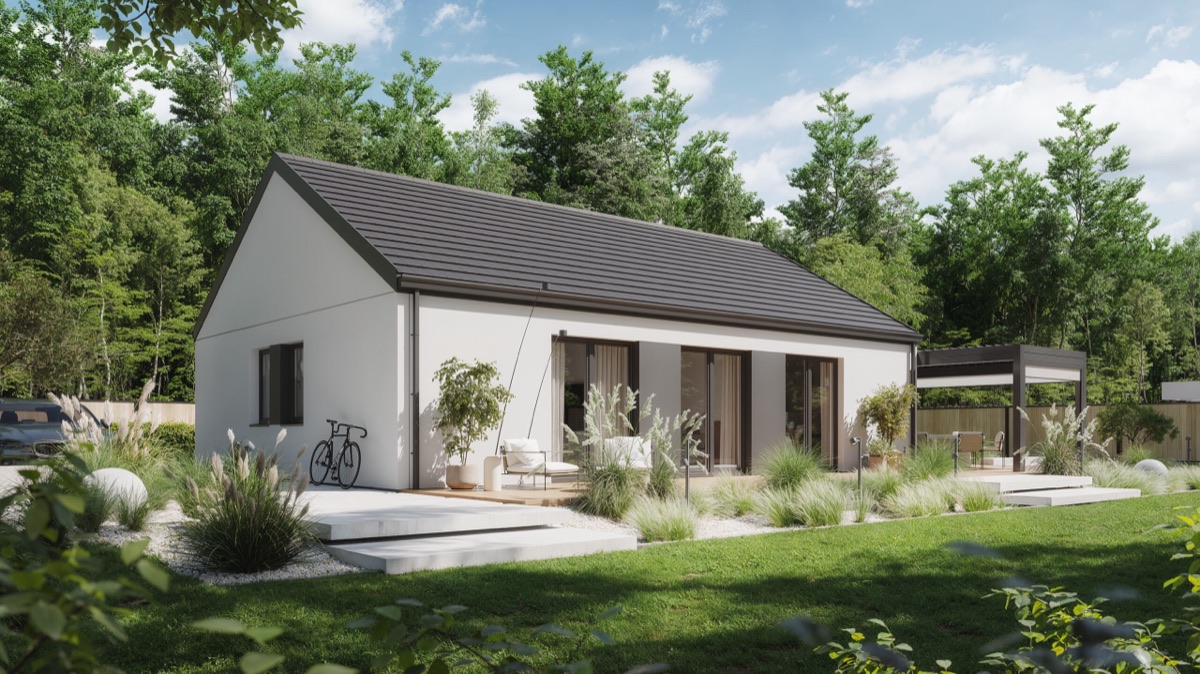

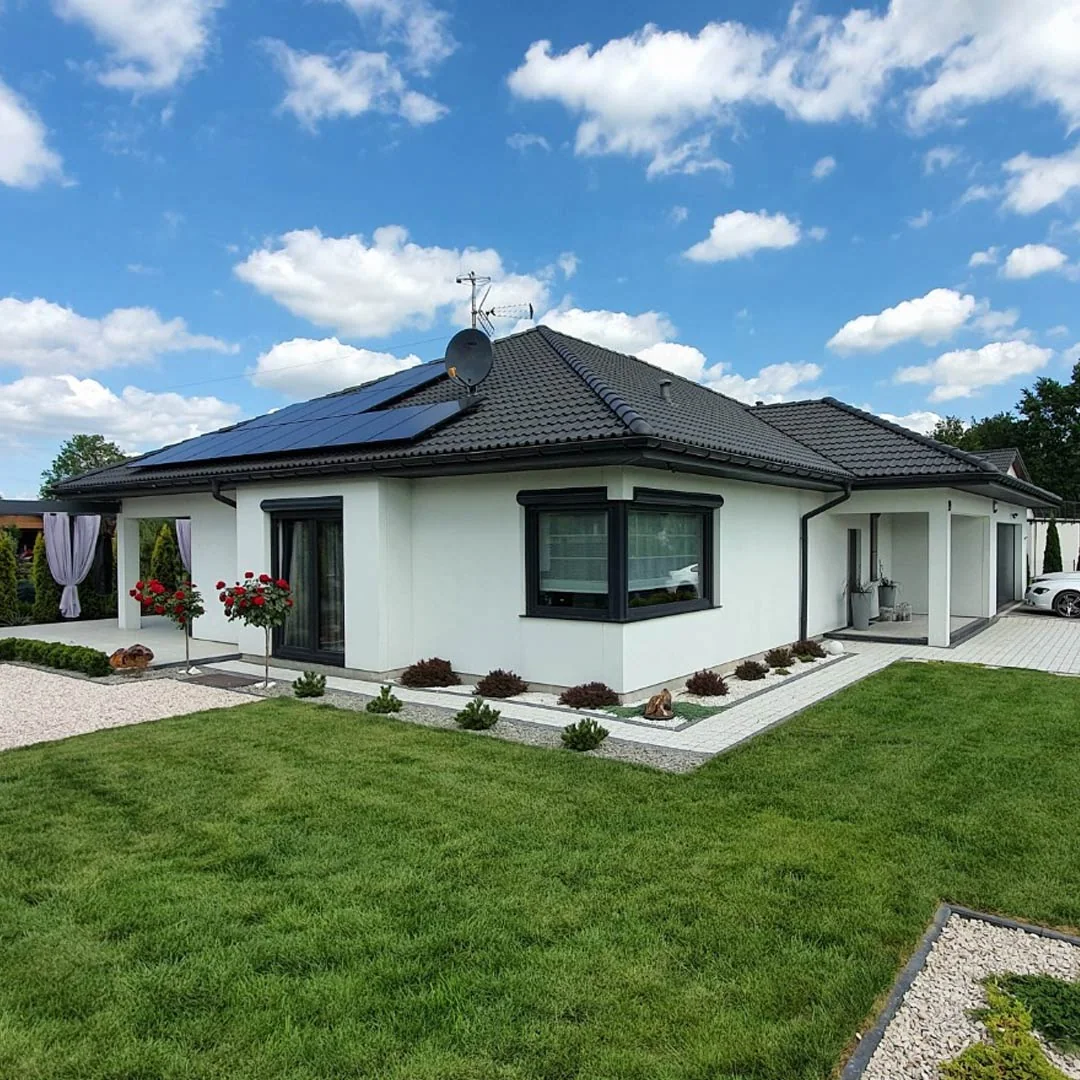
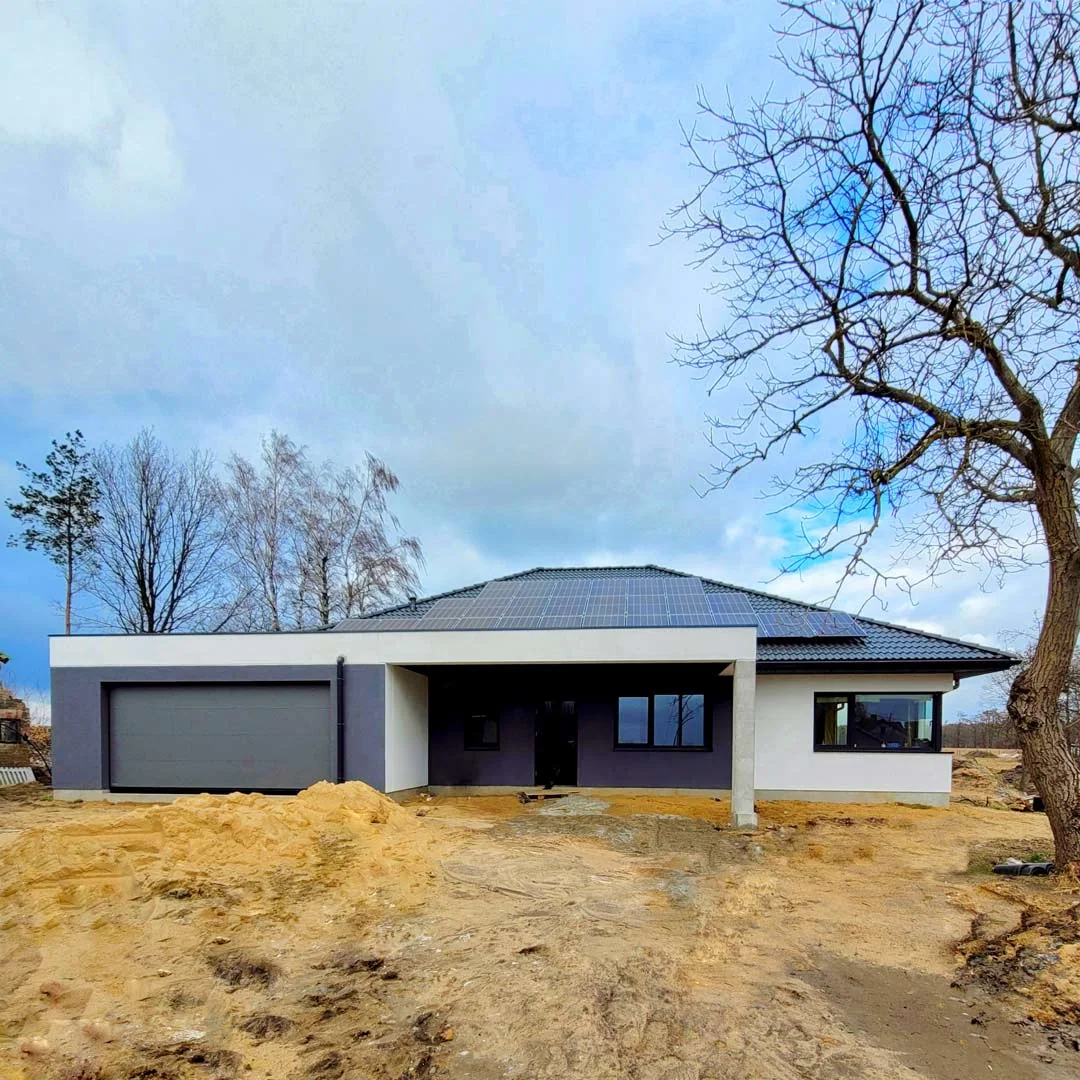
Are you getting ready to build a family nest? Don’t invest in outdated construction solutions – electricity costs are rising year by year, so it’s worth thinking about the future today! And the future is our prefabricated layered houses using Mabudo Eco® technology – with a wall U-value of 0.147 W/m²K. In appearance – both outside and inside – these buildings are practically indistinguishable from traditionally built houses. The construction process itself, however, is much shorter.
What characterizes an energy-efficient building?
A house, including one made of prefabricated sandwich elements, can be called energy-efficient if its annual demand for energy from non-renewable sources (EUco) necessary for heating and ventilation does not exceed 70 kWh/m2. This requires ensuring a high level of tightness of the building body and minimizing heat losses by performing appropriate insulation of external partitions (walls, roof, floor on the ground, windows and doors).
Another important factor is the selection of devices, the optimal set is a high-performance heat pump, photovoltaics and mechanical ventilation with heat recovery. It is also important to remember to locate the building on the property in accordance with the principles of optimal location in relation to the cardinal directions. Low-energy houses made of prefabricated sandwich elements using Mabudo Eco technology allow us to meet the rigorous requirements of WT 2021, making them environmentally friendly and cheap to operate. Below we describe how we managed to achieve this!
How are energy-efficient prefabricated reinforced concrete houses built?
The buildings can be assembled all year round, using ready-made elements that we deliver directly to the construction site. Houses in Mabudo Eco® technology have prefabricated sandwich walls with a layer of insulation from the inside of the building. The only „wet” work that precedes the assembly of individual prefabricated sandwich elements is pouring the foundation strips.
Modern technical solutions for the benefit of you and the environment
The issue of target heating is solved by a heat pump supported by mechanical ventilation with heat recovery, which allows for additional cost reduction. Low-energy prefabricated layered houses have a low-temperature, surface (underfloor) central heating system, supplied with heating water with weather-dependent parameters of 38/30°C in an air-to-water heat pump system. Additionally, the system is equipped with a capacitive heater for the preparation of domestic hot water and to ensure the circulation of hot water in the building.
It is also worth emphasizing that the elements of low-energy houses using Mabudo Eco® technology are manufactured from materials with high resistance to mechanical damage, various weather conditions and the development of fungi and molds, which guarantees the maintenance of the desired functional properties for many years.
Low-energy prefabricated sandwich houses – short investment implementation time
If you want to build a fully functional house quickly and at a good price, prefabricated concrete buildings will meet all your expectations.
The total investment time can be as short as 4 months, with the assembly of individual elements usually taking no more than a few days. Check out the finished projects on our website and build your dream house – the one you always long for!
FAQ – how to build a low-energy house from precast concrete
What is a low-energy house?
It is designed to use little energy for heating, ventilation and everyday operation. Insulation matters, but so do shape, airtightness, windows, heat recovery and heat source.
Are concrete prefabricated elements suitable for low-energy houses?
Yes. Prefabrication helps control wall and detail quality, while concrete mass stabilises temperature. The final result depends on the whole design and correct assembly.
Which installations reduce energy use?
Common solutions include a heat pump, mechanical ventilation with heat recovery, photovoltaics and well-designed automation. Reducing thermal bridges is also important.
Does a low-energy house have to be expensive?
Not always. Some costs come from better materials and installations, but a well-planned house can lower operating costs for years. Construction and operating costs should be considered together.