
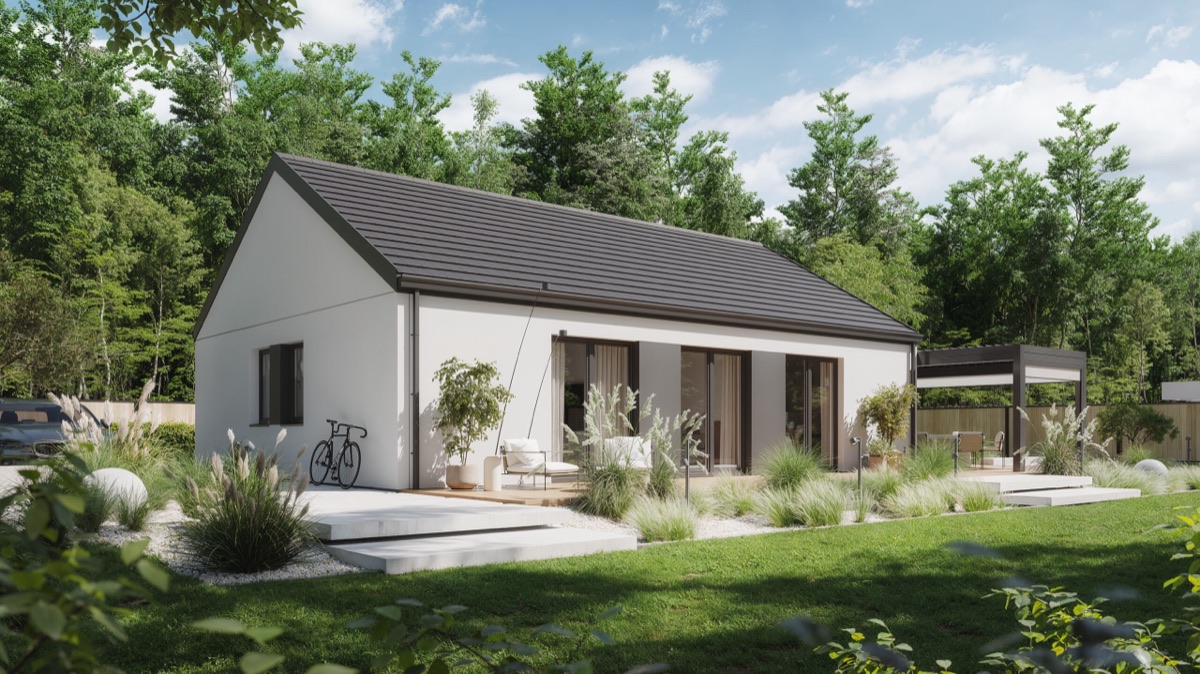
Kasia bought her plot two years ago. The design is already settled in her head: the massing, the layout, the interior style. And that's when the stage nobody plans for begins – one everyone goes through anyway. It isn't about the facade or trendy glazing, but about less “Instagram-friendly” questions: will this house start cracking after a few winters? Will it still be worth anything in 20 years? Will it become a costly problem instead of a safe haven?
That's exactly the moment when investors first set the inspiration boards aside and start comparing building technologies. Because a new house is a decision meant to outlast a mortgage, outlast trends, and outlast one generation. In 2026, floor area and layout still matter, but next to them sits a second layer of thinking: how long will this house actually last, and what will happen to it in 30, 50 or 100 years?
How durable is a house built from concrete prefabricates?
Concrete prefabrication is one of the most durable house-building technologies – and that's not down to the material alone, but to the process behind it. In traditional construction, quality is made on site: every wall and every slab depends on the weather, how well the crews are coordinated, and how precisely the work is done. That's why two “identical” houses can behave completely differently after a few years.
Prefabricated reinforced concrete works the other way round. Quality is made earlier, in the production hall. The elements have identical parameters, aren't exposed to moisture, and don't “catch” workmanship errors. The result is a structure that doesn't change its properties over the years.
Concrete or brick – which to choose in 2026?
This comparison usually starts with materials, but it should start with process. You're not choosing between concrete and brick – you're choosing between building “on site” and building “from a factory”. In traditional construction (a brick-built house) the house goes up on the plot step by step, and every stage depends on the conditions and the people involved. In a prefabricated concrete house (MABUDO) the house is built earlier, in a controlled factory environment, and on the plot it's assembled into a finished structure.
Prefabrication means moving construction from the plot into the hall. First a precise model of the house is created in CAD/BIM software, then the walls, slabs and structural elements are produced under controlled conditions. And importantly – these aren't “raw walls”: a prefabricate can already include integrated insulation, window and door openings, spaces for utilities, and even a facade layer. The shell can be finished in as little as a few days.
How does prefabrication compare with other technologies?
There are several building systems on the market – from traditional bricklaying, through timber-frame construction, to various forms of prefabrication. The differences only become clear once you put them side by side:
| Criterion | Brick-built | Timber frame | Reinforced-concrete prefabrication (MABUDO) |
|---|---|---|---|
| Build time | 9–18 months | 5–8 months | 4–6 months |
| Weather impact | high | medium | minimal |
| Workmanship precision | depends on the crew | low–medium | very high (CAD/BIM) |
| Structural durability | high | low–medium | very high (C30/37 concrete) |
| Acoustics and mass | good | poor | very good |
| Wall insulation | good | medium | very good (U ≈ 0.14–0.23) |
| Fire resistance | high | low | high (class A1) |
| Total cost | variable | low–medium | stable and predictable |
| Waste | high | medium | minimal |
Reinforced-concrete prefabrication doesn't win on a single parameter – it wins on the sum of the things that matter most in 2026: time, predictability and durability. Other technologies can deliver good results too, but they depend much more on conditions and workmanship – prefabrication simply removes that variability.
Is a house built from concrete prefabricates safe?
Today, house safety means more than just meeting structural standards. Prefabricated reinforced concrete offers high resistance to fire, wind and water. Concrete is a non-combustible material (class A1), so it doesn't contribute to the spread of fire. The structure is designed to withstand strong wind gusts, and its mass has a stabilizing effect. On top of that, the material's low absorbency means the house copes better with moisture and flooding.
What's it like to live in a reinforced-concrete house?
In everyday use, the things you notice most are the ones that never show up in project plans. Above all, acoustics – massive walls effectively dampen sound, which translates into more privacy. The second thing is the ability to mount heavy fixtures: the wall structure lets you safely hang cabinets or appliances without extra reinforcement. Over time, people also come to appreciate how easy it is to upgrade the installations.
And then there's the math: reinforced-concrete prefabricated houses use less energy than traditional buildings of a similar standard. That comes from the high airtightness of the envelope, the absence of thermal bridges, and the material's ability to store heat – the difference can reach 30–40% over a year.
Sandwich wall: 6 cm façade concrete finished with façade paint, 18 cm graphite EPS and 14 cm load-bearing concrete; inside, thin-coat plaster ready for a skim coat.
Why is it a house for generations?
Back to Kasia – her questions weren't about how the house would look on handover day, but about what would happen to it later. Prefabricated reinforced concrete answers that, because it delivers stability over time: the structure doesn't change its properties, doesn't need constant repairs, and doesn't depend on variable building-site conditions. That's why, more and more often, this isn't just a choice of technology – it's a decision about whether you're building a house for yourself, or creating something that will outlast several generations.
FAQ – durability of precast concrete houses compared with brick houses
Is a house built from concrete prefabricates durable?
Yes – prefabricated reinforced concrete is one of the most durable house-building technologies. The structure's service life reaches 80–120 years, and because it's produced under controlled conditions, its parameters stay consistent and stable over time.
Concrete or a brick-built house – which works better for construction?
It depends on whether you're comparing the material or the process. Brick construction depends much more on conditions and workmanship, while concrete prefabrication delivers greater predictability, a shorter build time and consistent quality.
How long does it take to build a house from concrete prefabricates?
Construction using reinforced-concrete prefabrication usually takes 4 to 6 months. Assembling the structure on the plot itself can take anywhere from a few days to a few weeks.
Can you hang heavy items on reinforced-concrete walls?
Yes – reinforced-concrete walls allow heavy fixtures, such as kitchen cabinets or a water heater, to be mounted using standard anchors. A single fixing point can hold more than 200 kg.
Is concrete prefabrication more expensive than traditional construction?
The total investment cost is often comparable or lower. That comes from the shorter build time, fewer errors and greater predictability of expenses.
Is prefabrication just “wielka płyta” (large-panel system building)?
No – modern concrete prefabrication has nothing to do with the technology from the communist era. It's based on individual designs, digital modeling and high-quality materials that meet current European standards.